Overview
Psoriasis is a chronic, autoimmune inflammatory skin disease characterized by accelerated turnover of epidermal cells due to dysregulated T-cell activation and increased pro-inflammatory cytokines, particularly TNF-α, IL-17, and IL-23. This leads to thickened, scaly plaques with erythema and silvery-white buildup of keratin on the skin surface.
Psoriasis is not just a skin disorder, it is a systemic immune disease associated with metabolic, cardiovascular, and joint involvement. Up to 30% of individuals with psoriasis develop psoriatic arthritis (PsA), which causes joint inflammation, enthesitis, and progressive structural damage.
Psoriasis severity ranges from small localized plaques to wide-spread debilitating disease.
Common Symptoms
→ Red, inflamed, scaly plaques
→ Itching, burning, pain
→ Nail changes: pitting, onycholysis, dystrophy
→ Cracking and bleeding in severe cases
→ Social and psychological burden due to visibility
Psoriasis is associated with:
→ Psoriatic Arthritis
● joint inflammation + bone erosion
→ Metabolic Syndrome
→ Obesity and insulin resistance
→ Non-alcoholic fatty liver disease
→ Cardiovascular disease
● due to chronic inflammation
→ Depression and anxiety
This broader impact reflects psoriasis as a whole-body inflammatory disease.
Root Causes & Triggers
01. INFECTIONS
→ Staph aureus
→ Streptococcus
→ Candida
→ Porphyromonas gingivalis
→ Hepatitis C
→ CMV
→ SARS COV2
→ Lyme disease (borrelia)
→ Localized tonsillar infections (strep/ staph)
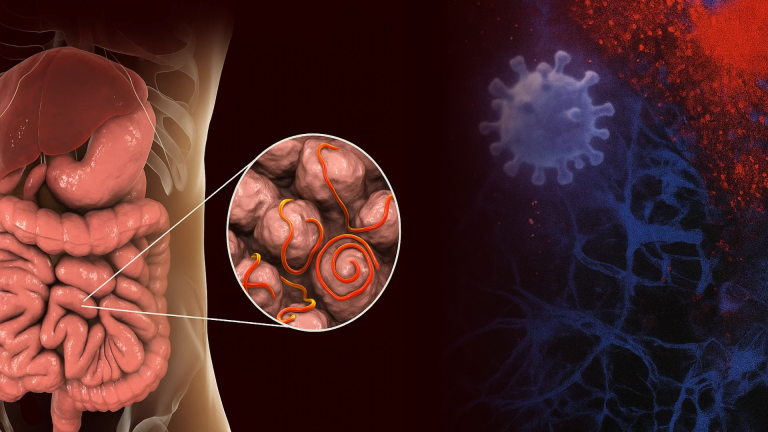
→ High parasitic incidence (amoebiasis, helminths)
02. TOXINS
→ barium (Ba), cesium (Cs), antimony (Sb), uranium (Ur), and cadmium (Cd)
● cadmium levels correlate with severity
→ Mercury
→ Pesticides
→ PFAS
→ Mycotoxins
→ Phthalates
03. CIRCADIAN
→ Perturbed clock transcripts in lesional/non-lesional skin vs. healthy.
→ Night-shift workers have higher psoriasis incidence.
→ Lower nighttime melatonin in psoriasis; disrupted rhythm.
● psoriatic patients had lost the nocturnal peak and usual circadian rhythm of melatonin secretion. Levels of melatonin were significantly lower than in controls at 2 a.m., and higher at 6 and 8 a.m. and at 12 noon.
04. TRAUMA
→ The brain and the skin originate from same germ layer during fetal development (i.e., the embryonic ectoderm) and are under the influence of the same hormones and neurotransmitters.
→ Tissue Resident Memory Cells (TRM cells) and dense mast-cell/nerve networks make the skin a fast responder to stress. Boundary wounds with shame or exposure themes often parallel flares, as neuropeptides raise local cytokines and dormant plaques reignite.
→ Skin autoimmunity often emerges in shame, boundary violations, separation conflict or the need for protection.
→ Childhood maltreatment predisposes psoriasis; acute stress amplifies.
→ Historical trauma triggers onset; anger/rumination worsens progression.
Our Approach
Our approach understands that Rheumatoid Arthritis is the body’s intelligent response to chronic dysregulation across the Four Pillars: circadian disruption, toxic burden, unresolved infections, and unprocessed trauma.
Effective treatment begins by identifying which of these key levers are most disrupted in your biology and unique health story using functional blood analysis, specific immune testing, Bioresoance and Autonomic Response Testing.
Once we uncover your unique levers we work in sequence to systematically bring the body back into a state of healing. We first restore circadian rhythm integrity to recalibrate hormonal, mitochondrial, and immune timing. We then open the drainage pathways to ensure the body can safely eliminate what has been overwhelming it. From there, we reduce toxic burden, systematically address stealth infections in the correct order and resolve the trauma patterns that keep the nervous system locked in defense mode.
Autoimmunity heals when the terrain heals. The goal is not immune suppression, but restoration creating an internal environment where inflammation is no longer required and the immune system can finally return to balance, clarity, and trust.
References
- Chen Y, Pan Z, Shen J, Wu Y, Fang L, Xu S, Ma Y, Zhao H, Pan F. Associations of exposure to blood and urinary heavy metal mixtures with psoriasis risk among U.S. adults: A cross-sectional study. Sci Total Environ. 2023 Aug 20;887:164133.
- Liaw FY, Chen WL, Kao TW, Chang YW, Huang CF. Exploring the link between cadmium and psoriasis in a nationally representative sample. Sci Rep. 2017 May 11;7(1):1723.
- Zeldin J, Jordan J, Thota P, Vuong R, Jojo C and Myles IA (2025) Barium and psoriasis: a mini-review and hypothesis linking environmental exposures to ion channel modulation. Front. Med. 12:1585525.
- Wacewicz-Muczyńska M, Socha K, Soroczyńska J, Niczyporuk M, Borawska MH. Cadmium, lead and mercury in the blood of psoriatic and vitiligo patients and their possible associations with dietary habits. Sci Total Environ. 2021 Feb 25;757:143967.
- Gangemi S, Miozzi E, Teodoro M, Briguglio G, De Luca A, Alibrando C, Polito I, Libra M. Occupational exposure to pesticides as a possible risk factor for the development of chronic diseases in humans (Review). Mol Med Rep. 2016 Nov;14(5):4475-4488.
- Spiewak R. Pesticides as a cause of occupational skin diseases in farmers. Ann Agric Environ Med. 2001;8(1):1-5.
- Zhou S, Yao Z. Roles of Infection in Psoriasis. Int J Mol Sci. 2022 Jun 23;23(13):6955.
- Rouai, M.; Rabhi, F.; Mansouri, N.; Jaber, K.; Dhaoui, R. New-onset guttate psoriasis secondary to COVID-19. Clin. Case Rep. 2021,9, e04542.
- Mathieu, R.J.; Cobb, C.B.C.; Telang, G.H.; Firoz, E.F. New-onset pustular psoriasis in the setting of severe acute respiratory syndrome coronavirus 2 infection causing coronavirus disease 2019. JAAD Case Rep. 2020, 6, 1360–1362
- Teng Y, Xie W, Tao X, Liu N, Yu Y, Huang Y, Xu D, Fan Y. Infection-provoked psoriasis: Induced or aggravated (Review). Exp Ther Med. 2021 Jun;21(6):567.
- Arvikar SL, Crowley JT, Sulka KB, Steere AC. Autoimmune Arthritides, Rheumatoid Arthritis, Psoriatic Arthritis, or Peripheral Spondyloarthritis Following Lyme Disease. Arthritis Rheumatol. 2017 Jan;69(1):194-202.
- Rachakonda TD, Dhillon JS, Florek AG, Armstrong AW (2015) Effect of tonsillectomy on psoriasis: a systematic review. J Am Acad Dermatol 72: 261-275.
- Celoria V, Rosset F, Pala V, Dapavo P, Ribero S, Quaglino P, Mastorino L. The Skin Microbiome and Its Role in Psoriasis: A Review. Psoriasis (Auckl). 2023 Oct 26;13:71-78.
- Khare S, Trivedi T. Coexisting parasitic infestations in patients with psoriasis and effects of deworming therapy on response of treatment. Panacea J Med Sci 2020;10(2):68-70.
- Sathyanarayana Rao TS, Basavaraj KH, Das K. Psychosomatic paradigms in psoriasis: Psoriasis, stress and mental health. Indian J Psychiatry. 2013 Oct;55(4):313-5.
- Duan J, Greenberg EN, Karri SS, Andersen B. The circadian clock and diseases of the skin. FEBS Lett. 2021 Oct;595(19):2413-2436.
- Rajasekharan A, Munisamy M, Menon V, Mohan Raj PS, Priyadarshini G, Rajappa M. Stress and psoriasis: Exploring the link through the prism of hypothalamo-pituitary-adrenal axis and inflammation. J Psychosom Res. 2023 Jul;170:111350.
- Mozzanica N, Tadini G, Radaelli A, Negri M, Pigatto P, Morelli M, Frigerio U, Finzi A, Esposti G, Rossi D, et al. Plasma melatonin levels in psoriasis. Acta Derm Venereol. 1988;68(4):312-6.
Contents

The Autoimmune Revival Book
Inside the book, you’ll discover how modern science and embodied healing can work together to create sustainable vitality.

The Autoimmune Revival Free Course
The same breakthrough that saved my wife has now helped hundreds of patients break free from chronic fatigue, pain, and inflammation, naturally and permanently.
The Autoimmune Revival Book
Inside the book, you’ll discover how modern science and embodied healing can work together to create sustainable vitality.
The Autoimmune Revival Free Course
The same breakthrough that saved my wife has now helped hundreds of patients break free from chronic fatigue, pain, and inflammation, naturally and permanently.
Join 5k+ readers getting our free weekly newsletter, packed with research-backed insights to help you heal.
You're in! Thank you!